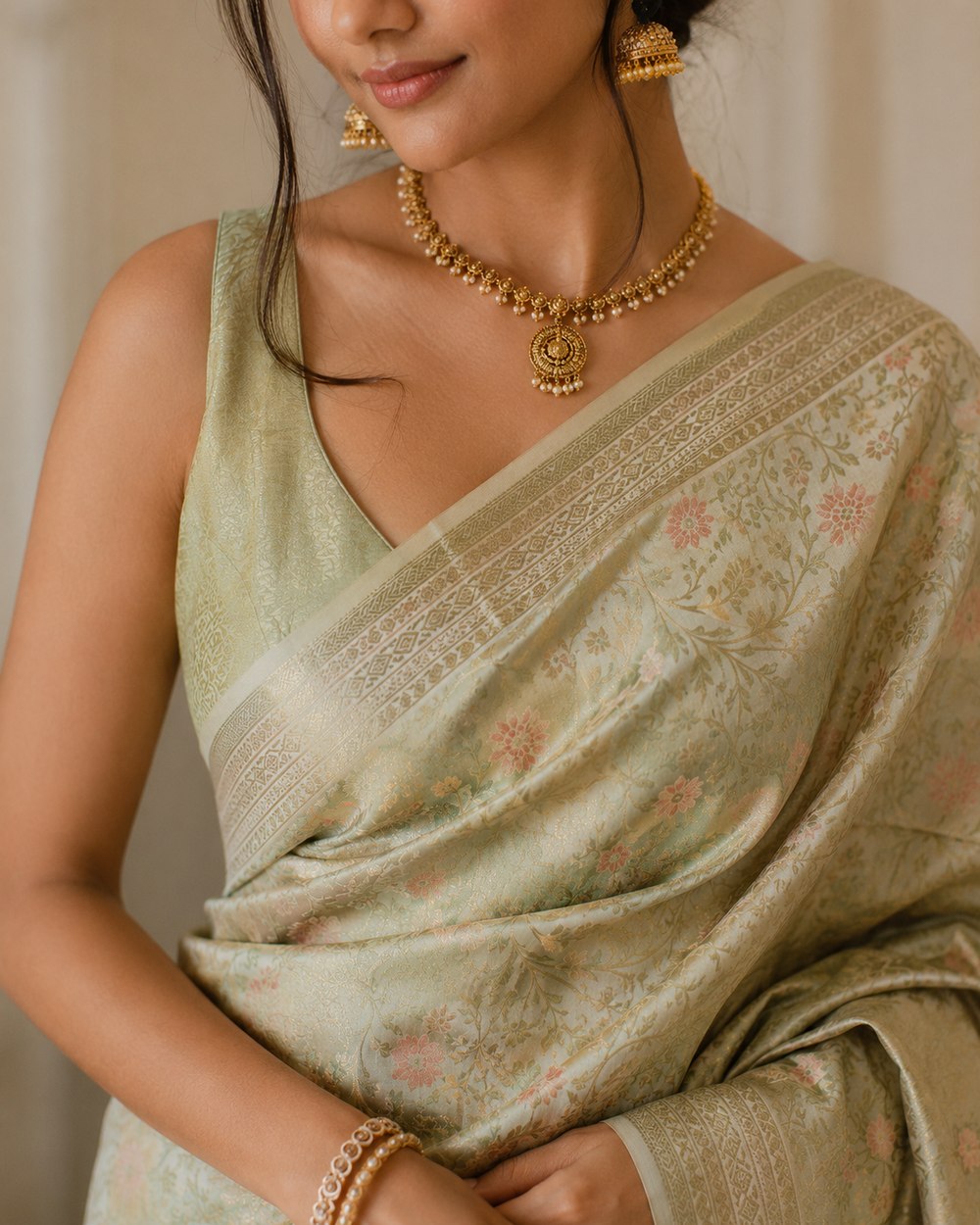
Ikat is having a real moment right now, and I understand why — there's something about the softness at the edge of an ikat motif, that slight, deliberate blur, that no printed pattern can fake. But almost nobody buying one online knows what actually goes into it, or why that blur exists at all. It isn't a printing effect. It's the fingerprint of a process that begins long before a single thread touches the loom.
In single ikat, it's the weft threads that are measured, marked, and bound section by section with a resist material before dyeing — sometimes through several rounds of colour, each one requiring the bindings to be redone with precision, since a millimetre of misalignment shows up as a blur in the wrong place. Only once the dyeing is fully finished does the actual weaving begin, with the weaver working slowly to align the pre-dyed pattern as the cloth takes shape. For a saree of moderate complexity, from the first thread bound to the final length cut off the loom, eleven days is a realistic, honest number — not a round figure picked to sound impressive.
"That soft blur at the edge of an ikat motif isn't a flaw. It's the proof of the process."
When I'm shortlisting ikat pieces on a market visit, I'm checking things a photograph will never show you — how cleanly the resist-dyeing was done, whether the motif aligns properly across the width of the cloth, whether the weave is dense enough to hold its shape over years, not months. A slightly blurred alignment can be part of the charm of hand ikat; a genuinely careless one is simply poor execution, and the difference between the two is exactly why this has to be checked by hand, piece by piece.
It also explains the price gap between a real handwoven ikat and the power-loom or printed imitations flooding the market right now, riding the same demand. Eleven days of binding, dyeing and weaving is not a marketing detail — it's the literal, unautomatable cost of the thing. Once you know what you're looking at, an ikat saree stops being just a pattern, and starts being a small, deliberate act of labour you get to wear.