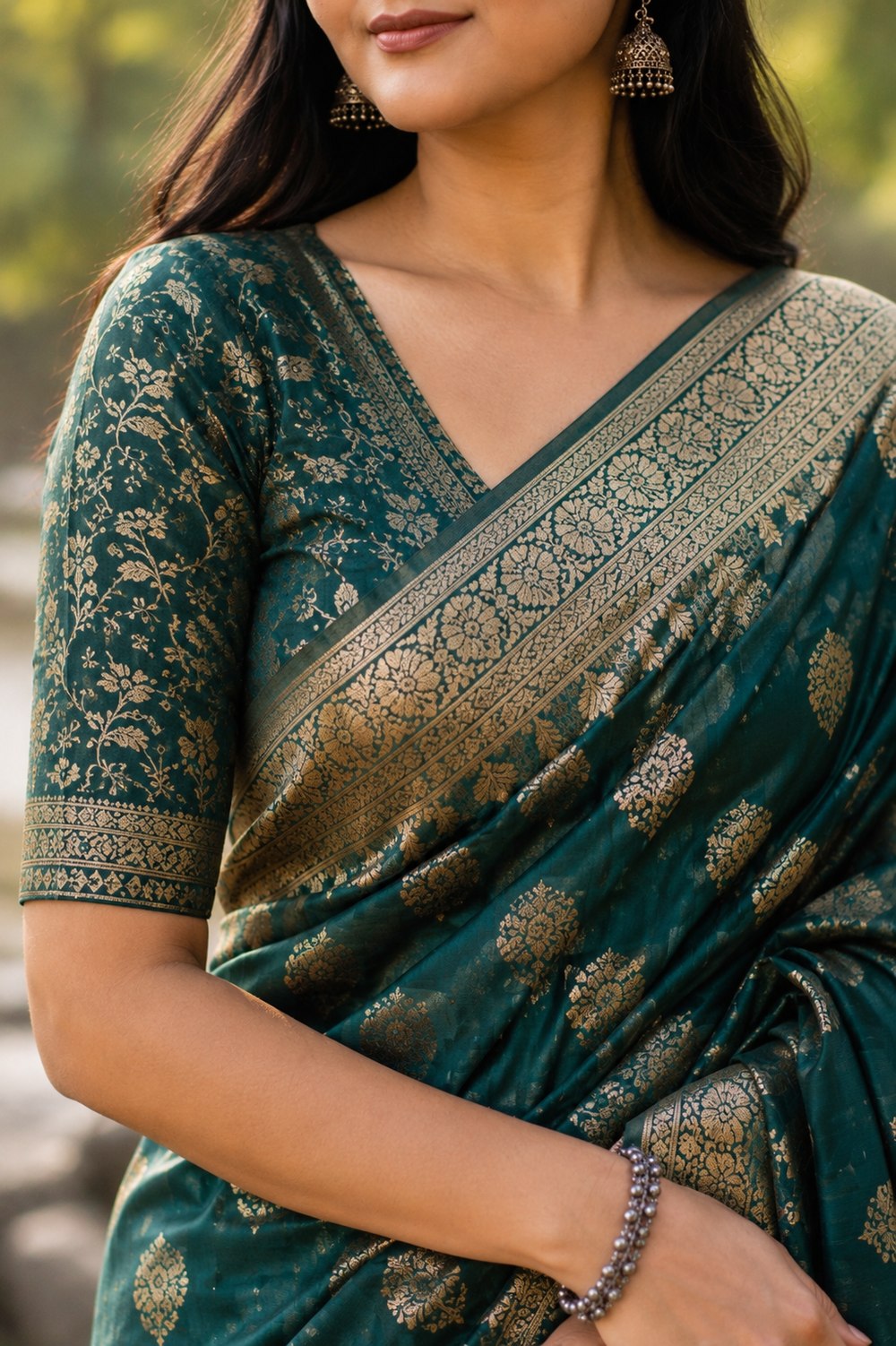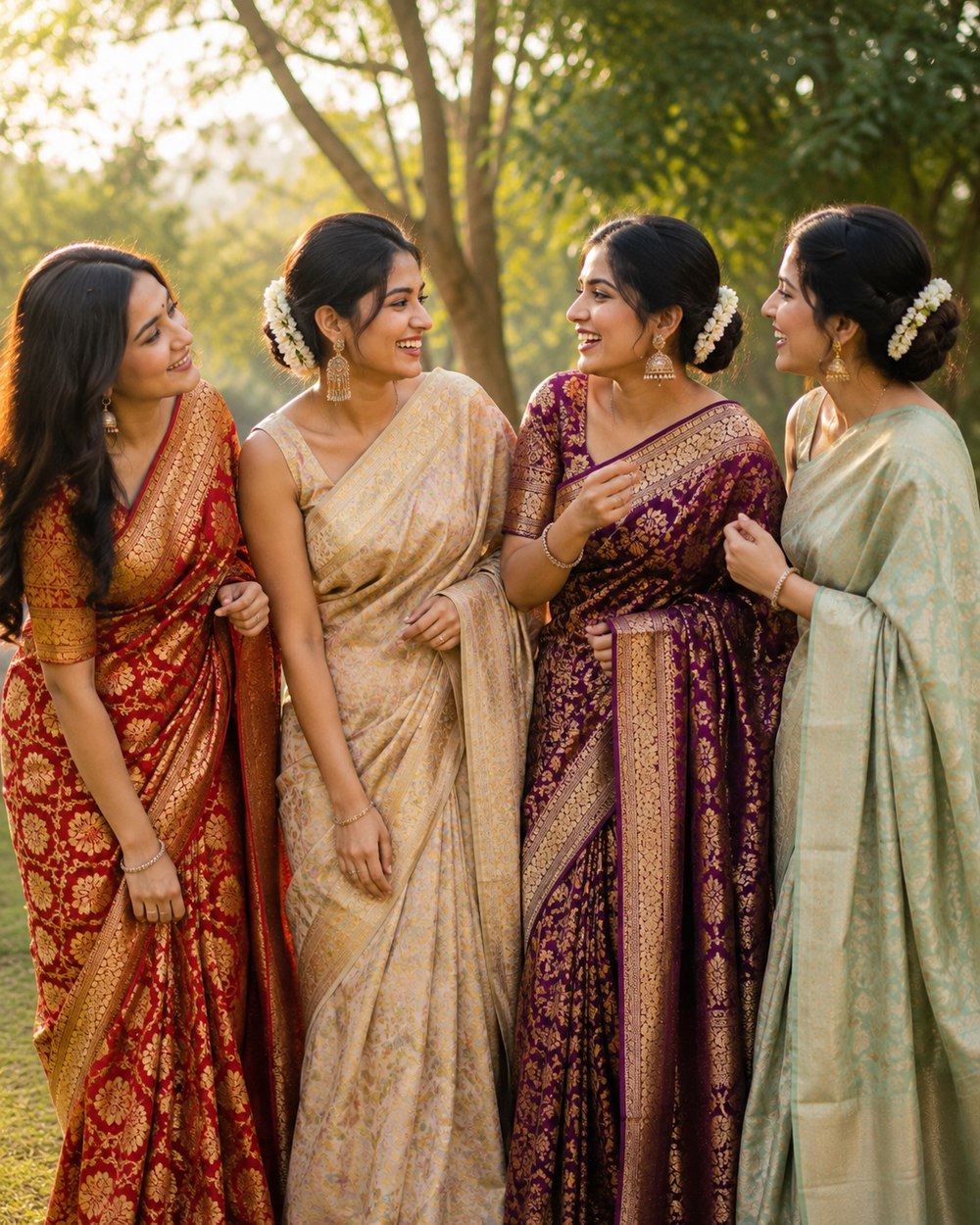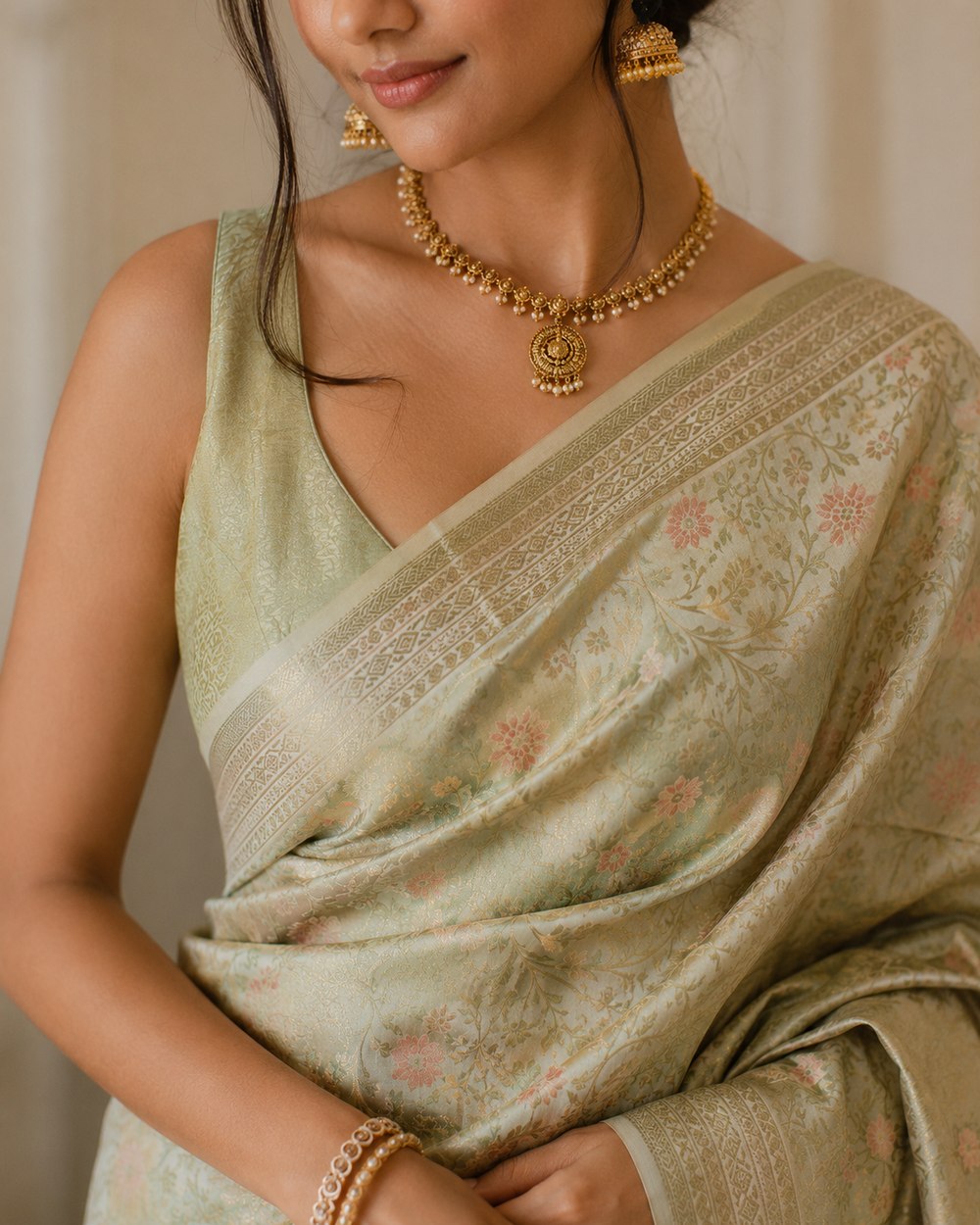
A saree that looks good standing still for a photograph and a saree that feels good moving through an actual evening are not always the same garment. I learned this the hard way, early on, dressing brides who looked flawless in the mirror and then found themselves fighting their pallu through dinner. A drape has to survive being lived in, not just photographed.
What decides that is rarely the print. It's the weight of the fabric, how it's been pleated, and whether the pins are doing more work than the fabric itself wants to do. A silk that's too stiff will hold a shape but fight the body. A georgette that's too light will need more structure than most people expect. Getting this right isn't about following one universal method — it's about matching the drape to the fabric, and the fabric to the body wearing it.
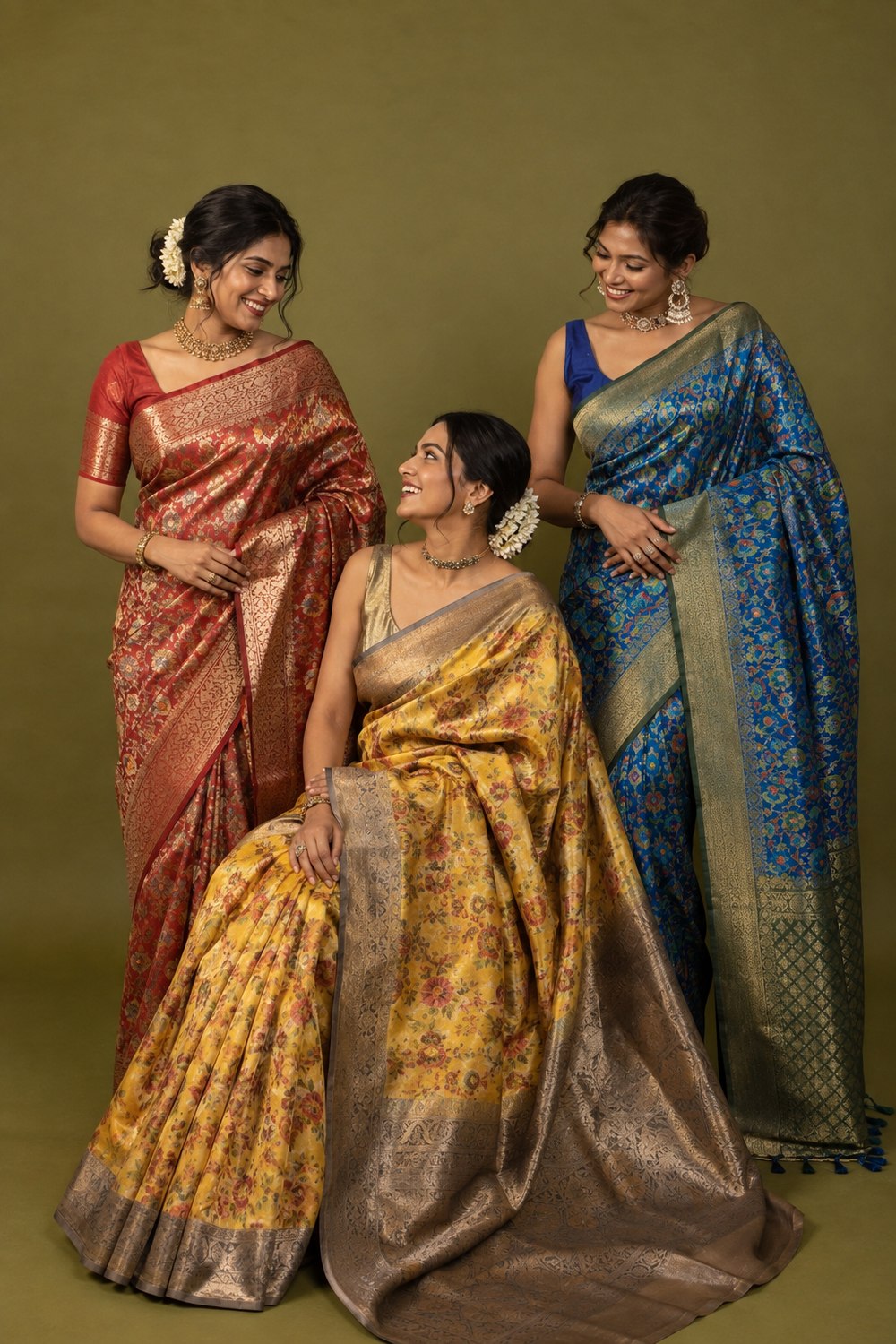
"A drape that photographs well and a drape that survives an evening are two different achievements."
This is also where a lot of first-time saree buyers lose confidence — not because draping is genuinely difficult, but because most guidance online assumes one fabric, one body, one occasion. We'll be building out proper draping notes for each piece we carry, so you know not just what you're buying, but how it's meant to sit on you specifically.