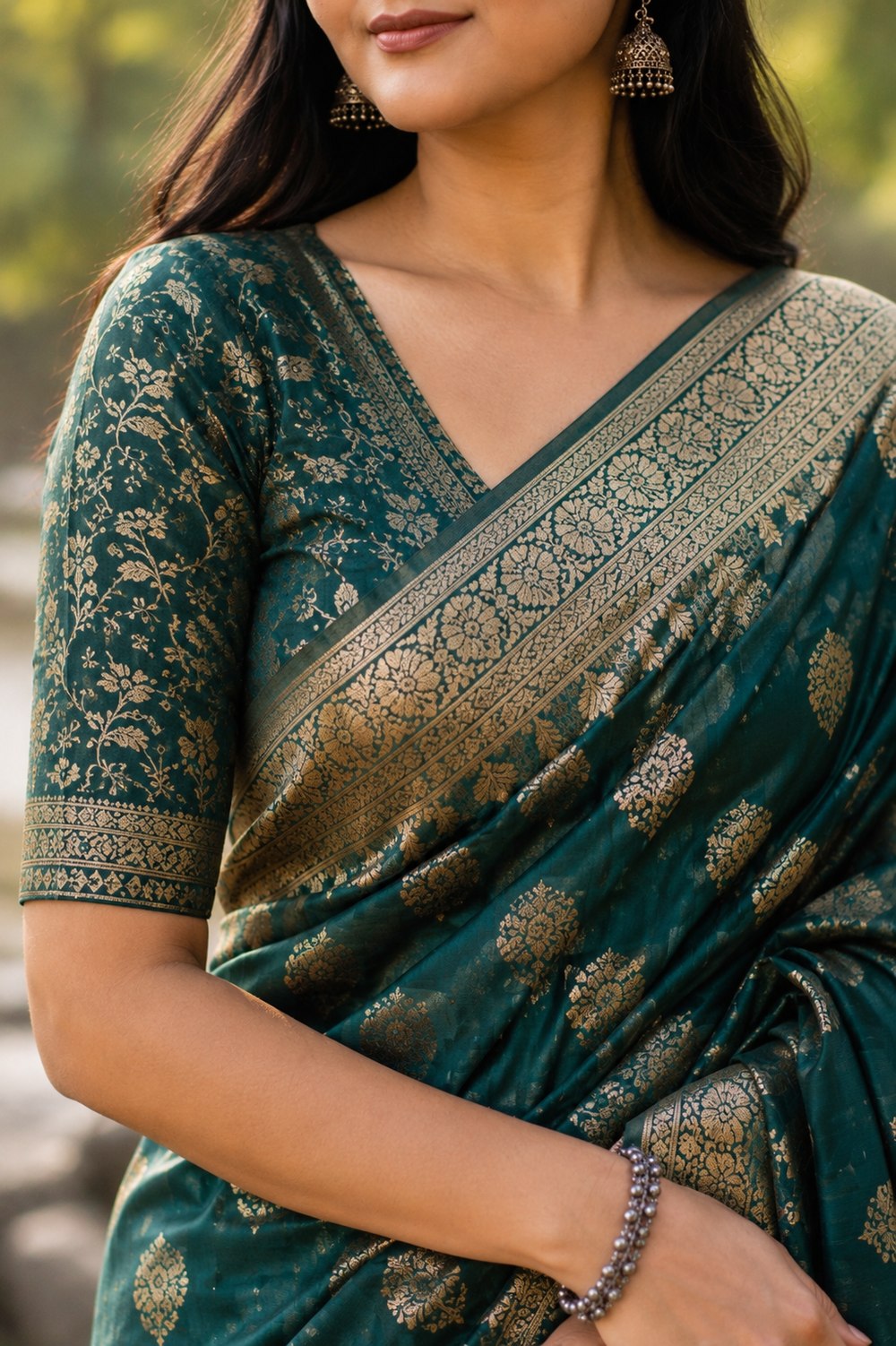
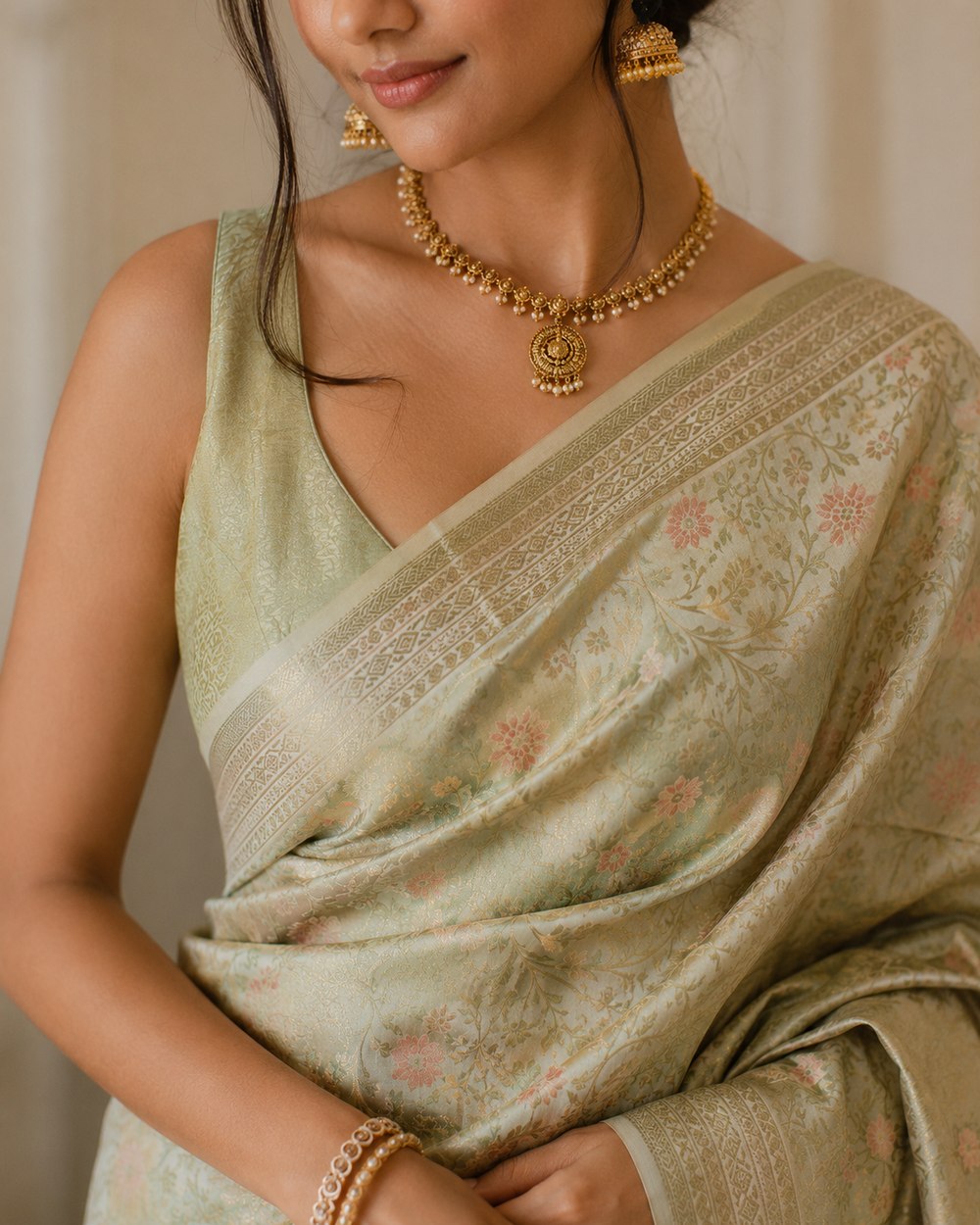
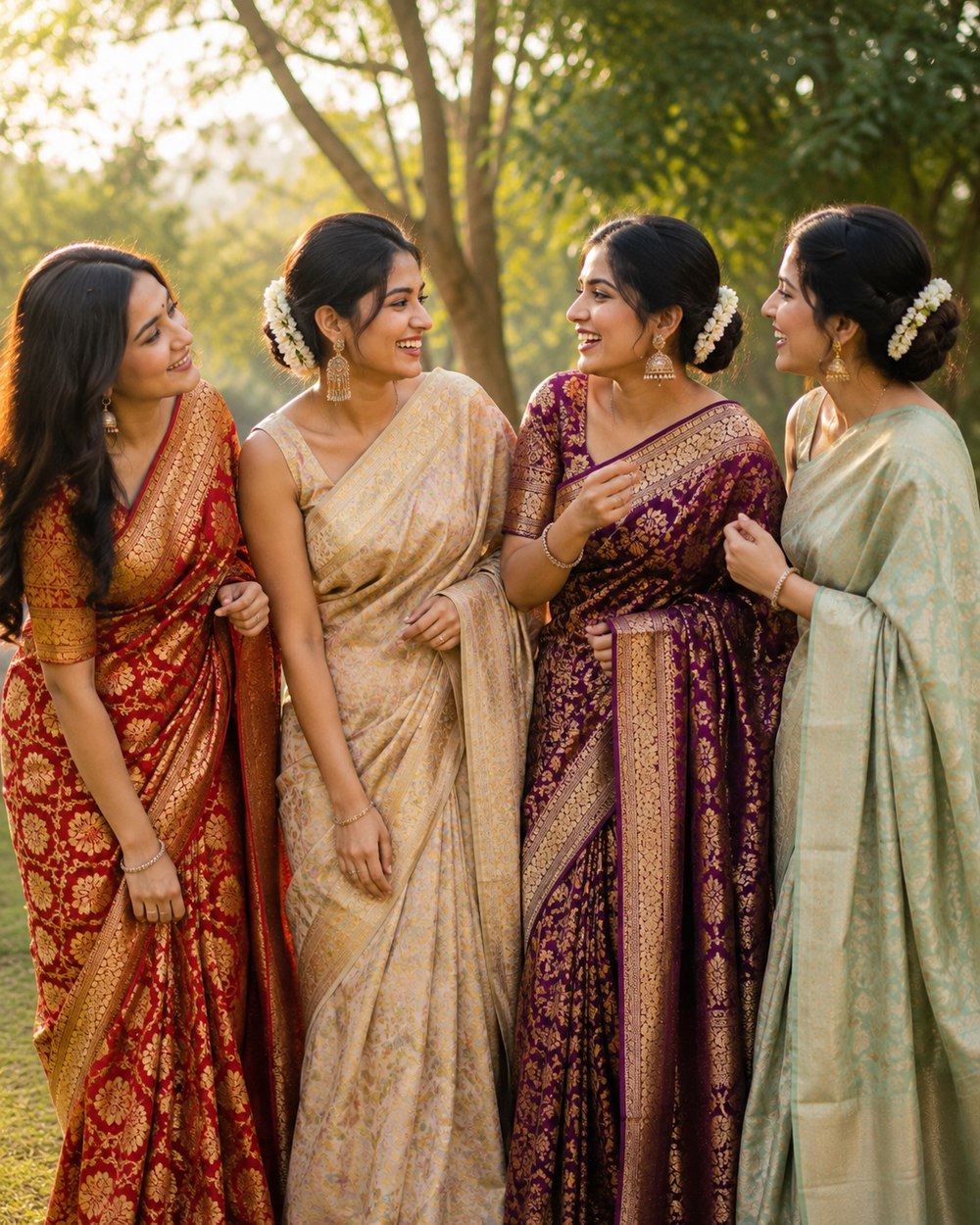
I have spent two decades standing in fitting rooms. Not behind a desk, not behind a screen — actually standing there, watching a woman turn toward the mirror, watching her face in the half-second before she decides whether something is right. You learn more about clothing in that half-second than you do in a hundred product photographs. You learn where a blouse pulls when it shouldn't. You learn that a saree can look perfect on a hanger and completely wrong the moment it meets an actual body, an actual walk, an actual day.
That half-second is the thing online shopping still hasn't solved. A photograph can show you a colour. It cannot show you a drape. It cannot tell you whether the silk will sit heavy on the shoulder or move the way it promised in the video. And a blouse — a blouse is the least forgiving garment there is. Off by a centimetre in the wrong place, and nothing about the outfit feels finished, no matter how beautiful the fabric.
"A catalogue can show you a thousand sarees. It cannot tell you which one is actually good."
So a few years ago I stopped waiting for the industry to close that gap, and started closing it myself. I began going directly to the market hubs — spending days at a stretch simply looking, touching, holding fabric up to the light the way I was trained to, years before any of this became a business. Most of what I see, I don't select. That's the part people don't expect: the selecting is not about finding a lot of beautiful things. It's about saying no, again and again, until what's left actually earns a place in the collection.

I think about fit the same way I think about fabric — as something that has to be understood, not guessed at. Two decades of dressing Indian women, of a thousand small adjustments, taught me things no size chart ever will: how a blouse should sit across a particular kind of shoulder, how a pleat needs to be pinned differently depending on height, how "one size" was never really a size at all. That's the expertise I want every piece we sell to carry — not as a slogan, but as an actual, working standard.
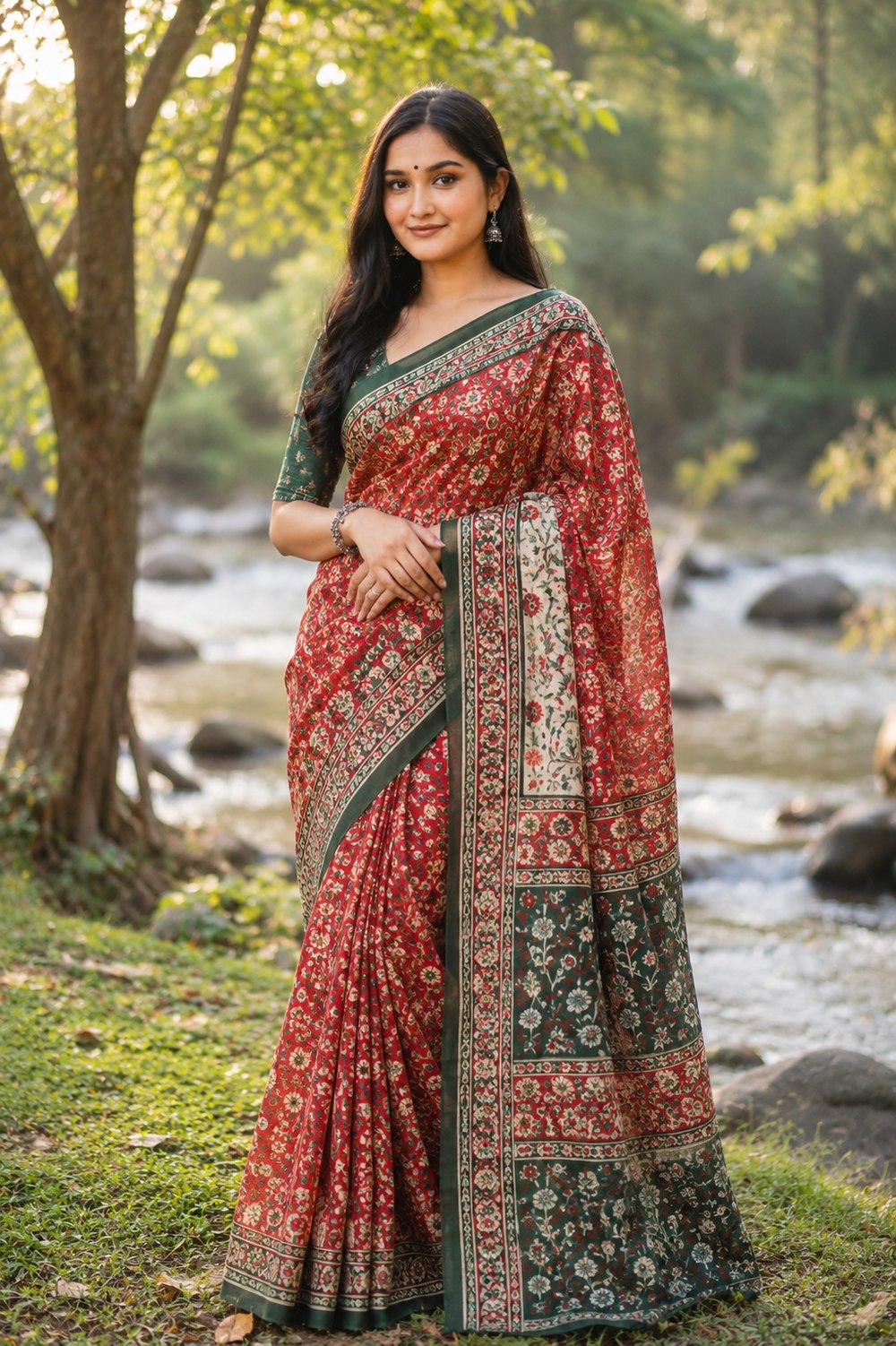

Rakhi & Co. began as an answer to a simple, slightly stubborn belief: that buying a saree online shouldn't feel like a gamble. Not on the colour. Not on the fabric. Not on whether it will actually look the way it was promised to look. Every piece we bring into the collection has already passed through my hands, been checked against the light, been chosen because it belongs — not because it was available.
This is the first of many notes I'll be writing here — on craft, on fit, on the small decisions that make a saree feel complete rather than merely worn. I hope it becomes less a shop window, and more a place you come back to because you trust what you'll find.
Welcome to the Edit.